Best Pool Filter Cleaner 2026 - Sand, Cartridge, and DE Compared
Our Verdict
Natural Chemistry Filter Perfect is the best pool filter cleaner for most residential pool owners. The enzyme-based formula works safely on sand and cartridge filters, reliably dissolves oils and sunscreen residue, and does not produce foam or damage filter media. It costs slightly more than some competitors but the enzyme formula means it works where cheaper products do not.
Amazon Prices at a Glance
Checked August 10, 2026
- Natural Chemistry Filter Perfect Pool Filter Cleaner, 1 Liter, Single Pack$20.99 View
- HTH 67227, Swimming Pool Care Filter Cleaner, 32oz$17.99 View
- BioGuard Strip Kwik Degreasing Filter Cleaner, 1 Quart, Single Pack$20.99 View
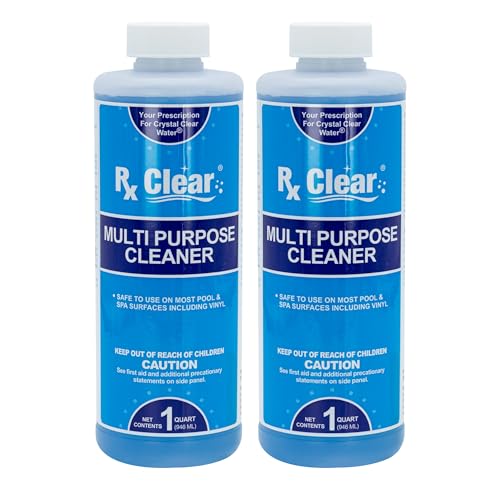
- Rx Clear Multi-Purpose Cleaner | Prevent and Remove Dirt, Dark Marks and Calcium Scale | Safe for Use On Most Pool and Spa Surfaces Including Vinyl | 1 Quart Bottles | 2 Pack$22.99 View
Pros
- Enzyme-based formula breaks down oils completely rather than just dispersing them
- Safe for both sand and cartridge filters, one product covers most filter types
- Does not foam in the filter or plumbing
- No strong chemical smell, safer to handle than acid-based cleaners
- Effective on sunscreen, body oils, and organic buildup
Cons
- More expensive per ounce than some competitors
- Requires overnight soak for best results, not a quick fix
- Not effective on heavy mineral or calcium scale (need a separate acid-based cleaner for that)
What Is the Best Pool Filter Cleaner?
The best pool filter cleaner for most pool owners is Natural Chemistry Filter Perfect, at about $18 to $22 per quart. Its enzyme formula breaks oils and sunscreen down completely instead of dispersing them, and it is labeled safe for both sand beds and cartridge media, so one bottle covers most residential filters. Because the enzymes digest oil molecules rather than pushing them around, the fouling leaves on the next backwash instead of resettling in the media, the formula is low-foaming by design, and owner reports on loaded sand filters consistently describe pressure returning to the clean baseline after an overnight treatment. The one job it will not do is hard calcium scale, which needs an acid-based cleaner such as the Hayward scale remover instead.
Beyond that single pick, the honest answer is that the best cleaner depends on two things: the filter you run and what is actually fouling the media. Enzyme and alkaline cleaners strip oils, sunscreen and body fats and are safe on every filter type. Acid-based cleaners dissolve calcium scale but belong on sand and DE only. General-purpose formulas cover routine seasonal grime and nothing heavier. By scenario: greasy media on any filter, use an enzyme cleaner; white crusty deposits, use an acid-based scale remover; a sand bed that has gone a season or more without treatment, use a concentrated sand-safe formula; a cartridge in hard water, use an enzyme plus citric acid blend.
How We Compared Pool Filter Cleaners
Comparing pool filter cleaners starts with the active ingredient on the label, because the chemistry decides what a product can and cannot dissolve, long before marketing language comes into it.
Our comparison approach:
- Read each product’s active-ingredient disclosure and safety documentation to place it in a chemistry class (enzyme, alkaline degreaser, citric blend, or mineral acid)
- Matched that chemistry to the fouling it can address: enzymes and alkalines for oils and sunscreen, acids for calcium and metal scale
- Checked the manufacturer’s filter-type compatibility claims for sand, cartridge, and DE media
- Reviewed dosing, contact time, and cost per cleaning from the label directions
- Aggregated owner reports across retailer listings and pool forums, weighting recurring patterns such as pressure returning to baseline, foaming complaints, or media damage
We compared products across sand filter, cartridge filter, and DE filter applications.
A chemical pool filter cleaner earns its place by dissolving what backwashing and rinsing leave behind: oils, sunscreen residue, and mineral deposits that stay bonded to the media after the water pressure stops. A good filter cleaning solution restores the filter to its clean baseline pressure, which is the outcome owner reports describe most consistently for the products below.
Product Rankings
1. Natural Chemistry Filter Perfect - Best Overall

Rating: 4.7/5
Natural Chemistry Filter Perfect uses an enzyme-based formula that breaks down hydrocarbon chains in oils and sunscreen rather than just dispersing them. This distinction matters: a product that disperses oils allows them to return to the filter and re-coat the media. An enzyme that breaks them down eliminates them.
On sand filters, the label procedure is a measured dose through the skimmer followed by an overnight soak, and owner reports consistently describe the morning backwash bringing pressure back to the clean baseline that plain backwashing had stopped reaching.
On cartridges, the label calls for an overnight soak followed by a garden hose rinse, and owners regularly note that the pleats rinse clean without the oily film a plain hosing leaves behind.
- Works on both sand and cartridge filters
- Enzyme formula completely breaks down oils (does not just disperse them)
- No foam, no strong chemical smell
- Safe for all filter media types
Buy Natural Chemistry Filter Perfect on Amazon
2. HTH Pool Filter Cleaner - Best Value

Rating: 4.3/5
HTH Pool Filter Cleaner is the most widely available pool filter cleaning product and performs well for routine seasonal cleaning. Available at Home Depot, Walmart, and most pool supply stores, it is the easiest option to find when you need it quickly.
Its general-purpose degreaser chemistry is well matched to lightly to moderately loaded filters, and owner feedback on routine end-of-season sand filter cleanings is solid. On heavily fouled filters with a long sunscreen backlog, that chemistry has less to work with than a true enzyme formula, and owner reports reflect that gap.
Best for: pool owners doing routine once-per-season maintenance cleaning.
Buy HTH Pool Filter Cleaner on Amazon
3. BioGuard Strip Kwik - Best for Heavy Buildup

Rating: 4.5/5
Strip Kwik is a concentrated formula designed for heavy contamination: filters that have missed seasonal cleaning, pools with heavy bather loads, or filters that have not been chemically cleaned in more than one season. The formula is more aggressive than enzyme cleaners, which is why it performs better on severe buildup.
The trade-off: Strip Kwik should not be used on cartridge filter media in very high concentrations, so follow dilution instructions carefully. For sand filters, it is extremely effective.
Best for: sand filters with heavy buildup, or as a reset after a major algae event.
Buy BioGuard Strip Kwik on Amazon
4. Rx Clear Natural Cartridge and Sand Filter Cleaner - Best for Cartridge Filters
Rating: 4.4/5
Rx Clear uses an enzyme and citric acid combination that is particularly effective on cartridge filter media. The citric acid component addresses light mineral scale (calcium deposits on cartridge surfaces) that pure enzyme products cannot break down.
That two-part chemistry makes it the strongest match for cartridges carrying both oil buildup and visible calcium scale, and owner reports from hard water areas back that up. For sand-only applications, Natural Chemistry Filter Perfect or BioGuard Strip Kwik are better choices.
Best for: cartridge filters in hard water areas.
Buy Rx Clear Natural Cleaner on Amazon
For a deeper look at products designed exclusively for cartridge media, see our review of the best pool cartridge filter cleaner.
5. Hayward Filter Cleaner Acid-Based Scale Remover - Best for Mineral Scale
Rating: 4.2/5
When the problem is calcium and mineral scale rather than oils, an enzyme cleaner will not touch it. A dedicated acid-based scale remover dissolves the hard, crusty deposits that build up on sand beds and DE grids in hard water areas. Because the reaction is acid meeting carbonate, it works on exactly the deposits enzymes cannot touch, and owners in hard water areas commonly report pressure dropping further after an acid soak where an enzyme clean had stalled.
Use acid-based cleaners on sand and DE filters only. They can shorten the life of cartridge pleats and should be diluted exactly per the label. Never use one on a freshly chlorinated system without rinsing first (see the safety section below).
Best for: hard water areas, visible white calcium scale, sand and DE filters.
Buy Hayward acid-based pool filter scale remover on Amazon
6. iN.YARD Pool Filter Enzyme Cleaner Spray - Best Quick Spray
Rating: 4.1/5
For light, between-soak maintenance, an enzyme spray lets you treat cartridge pleats and DE grids directly during a routine rinse without a full overnight soak. It will not match a long soak on heavily loaded media, but it extends the time between deep cleanings and is handy for spot-treating greasy bands on a cartridge.
Best for: quick touch-ups between deep cleanings, cartridge and DE grid surface oils.
Buy iN.YARD pool filter enzyme cleaner spray on Amazon
Best Sand Filter Cleaner
A sand filter cleaner is not just a cartridge cleaner in a different bottle. The sand bed is a deep, packed column of media that you cannot pull out and soak, so the product has to travel down through the bed, release oils and mineral film from every grain, and then flush back out through the laterals during a backwash. That puts three demands on the chemistry that a cartridge soak never faces: it must be low-foaming (foam trapped under the bed causes channeling and can push air into the pump), it must be safe on the plastic laterals and the multiport valve gaskets sitting at the bottom of the tank, and it must stay in suspension long enough to rinse out completely rather than leaving residue that feeds algae.
Our pick for sand is Natural Chemistry Filter Perfect. It is the same top pick as the overall winner for good reason: the enzyme formula does not foam, it is safe on laterals and gaskets at label strength, and owner reports on loaded sand beds consistently describe pressure returning to the clean baseline after a single overnight treatment. If the sand bed has gone more than a season without a chemical clean, or the pool has just come through an algae bloom, step up to BioGuard Strip Kwik, which is more aggressive and sand-only. If the deposits are white and crusty rather than greasy, that is calcium and you want the acid-based scale remover instead.
How to apply a sand filter cleaner:
- Backwash the filter for 2 to 3 minutes, then rinse for 30 seconds, so the cleaner is working on the sand rather than on loose debris.
- Turn the pump off at the breaker and set the multiport valve to Filter. Never move the valve handle with the pump running.
- Pour the measured dose of cleaner straight into the skimmer nearest the pump. Dosing is by filter size, so check the label rather than guessing.
- Run the pump on Filter for 15 to 30 seconds only, just long enough to draw the cleaner into the tank and through the sand bed, then shut it off.
- Let it sit 8 to 12 hours, or overnight. Contact time is what does the work here, not pump run time.
- Backwash for 3 to 5 minutes until the sight glass runs clear, rinse for 30 seconds, then return to Filter and note the new clean baseline pressure.
If pressure does not come back down to baseline after this, the sand itself is likely at the end of its life. Sand usually needs replacing every 5 to 7 years.
For the full ranking of sand-safe products, see our roundup of the best pool sand filter cleaner. For the routine backwash and cleaning schedule that this treatment fits into, see how to clean a pool sand filter.
Filter Cleaner vs Filter Cleaning Solution: Same Thing?
Mostly yes. Pool owners search for “filter cleaner”, “filter cleaning solution”, and “sand filter cleaner solution” more or less interchangeably, and the products behind those terms overlap heavily. The real difference is the format on the shelf:
- Concentrate. A thick liquid you measure and dilute, sold by the quart. Most of the products on this page are concentrates. Best cost per clean, and what you want for a sand filter, since you pour a measured dose into the skimmer.
- Ready-to-use solution. Pre-diluted liquid you pour straight into a soaking bucket without measuring. Convenient for cartridges, more expensive per cleaning, and rarely the right choice for a sand bed because you cannot get enough active ingredient into the tank.
- Tablets and pods. A dry dose dropped into a bucket of water for cartridge soaking. Easy to store and hard to mis-measure, but slow to dissolve and generally weaker on heavy oil loads.
- Sprays. Applied directly to cartridge pleats or DE grids during a rinse. A maintenance tool between deep cleans, not a substitute for a soak.
So when a label says “cleaning solution” it is usually just marketing language for the same enzyme or acid chemistry. What actually matters is the active ingredient (enzyme for oils, acid for scale) and whether the label clears it for your filter type.
Choosing a Cleaner by Contaminant Type
The single biggest mistake pool owners make is buying the wrong chemistry for the actual problem. An enzyme cleaner does nothing to calcium scale, and an acid does nothing to sunscreen oil. Match the cleaner to what is actually clogging the filter.
| Contaminant | Signs | Cleaner type | Our pick |
|---|---|---|---|
| Oils, sunscreen, body lotion | Greasy bands on pleats, oily film, foam | Enzyme | Natural Chemistry Filter Perfect |
| Calcium and mineral scale | White crusty deposits, hard water area | Acid-based | Hayward acid scale remover |
| Algae and biofilm | Slimy media, recent algae bloom | Concentrated alkaline or chlorine soak | BioGuard Strip Kwik |
| Metals (iron, copper) | Rust or green staining on media | Acid-based plus sequestrant | Hayward acid scale remover |
| Mixed oil plus light scale | Both greasy and gritty | Enzyme plus citric acid blend | Rx Clear Natural Cleaner |
If you are not sure, start with an enzyme cleaner. Oils are the most common contaminant in residential pools, and enzyme products are the safest to use across every filter type.
Cleaning DE Filters
DE (diatomaceous earth) filters use fabric-covered grids coated in a fine powder. The current page focuses on sand and cartridge filters, but DE grids need their own approach. The powder is rinsed off during backwashing, but oils and fine debris embed in the fabric over time and a backwash alone will not remove them.
For a deep clean, the grids come out and soak the same way a cartridge does. The key rule: use only enzyme cleaners or mild acid-based cleaners rated for fabric grids. A harsh caustic or undiluted acid will break down the grid fabric and shorten its life. Natural Chemistry Filter Perfect and a diluted acid soak are both safe choices; Strip Kwik at full concentration is not.
For the full process and how often to do it, see how to clean a DE pool filter and how often to clean a DE filter.
Cost Comparison Across the Products
Sticker price does not tell the whole story. A cheaper bottle that treats fewer cleanings can cost more per clean than a concentrate. These figures are approximate and based on a mid-size residential filter.
| Product | Typical price | Cleanings per container | Cost per clean |
|---|---|---|---|
| Natural Chemistry Filter Perfect | $18 to $22 | 3 to 4 | about $5 to $6 |
| HTH Pool Filter Cleaner | $10 to $14 | 2 to 3 | about $4 to $5 |
| BioGuard Strip Kwik | $20 to $28 | 2 to 3 | about $8 to $10 |
| Rx Clear Natural Cleaner | $16 to $24 | 3 to 4 | about $5 to $6 |
| Hayward acid scale remover | $14 to $20 | 4 to 6 | about $3 to $4 |
| iN.YARD enzyme spray | $12 to $18 | 6+ touch-ups | about $2 per touch-up |
The takeaway: the concentrated and acid products look expensive per bottle but stretch across more cleanings. The enzyme all-rounders sit in the middle and are the best value once you factor in that they work the first time on the most common contaminant.
DIY vs Commercial Cleaner
Plenty of pool owners try to save money with household chemicals. Some of that works, some of it causes problems.
- TSP (trisodium phosphate): a real degreaser and a long-standing DIY filter cleaner. It works on oils but phosphate residue can feed algae if not rinsed thoroughly.
- Dish soap: tempting because it cuts grease, but it foams badly inside the filter and plumbing and is hard to rinse out. We do not recommend it.
- Muriatic acid: effective on calcium scale at a 1 part acid to 20 parts water dilution, but genuinely hazardous to handle and capable of damaging cartridge media.
A commercial enzyme cleaner costs $15 to $20, works the first time on oils, and removes the guesswork. For the cases where DIY makes sense, follow established recipes rather than improvising. See our DIY pool filter cleaner guide for safe mixes, and our guide to cleaning a pool filter with muriatic acid before you attempt an acid soak.
Safety and Handling Notes
Filter cleaners are pool chemicals, and the acid-based ones deserve respect.
- Never mix acid and chlorine. Combining muriatic acid (or an acid-based cleaner) with chlorine products releases toxic chlorine gas. Rinse any chlorine off the filter with plain water before an acid soak.
- Wear gloves and eye protection for acid-based and concentrated products.
- Always add acid to water, never water to acid, when diluting.
- Work outdoors or in a well-ventilated area and keep containers labeled.
- Do not store mixed solutions; mix only what you need and rinse media thoroughly before returning it to service.
- Keep enzyme and acid products separate and never combine cleaners hoping for a stronger result.
When in doubt, an enzyme cleaner is the low-risk choice. It does not gas off, does not burn skin, and is hard to misuse.
Sand Filter Cleaner vs Cartridge Filter Cleaner
You do not necessarily need two different products, but you do need to check that the product you choose is labeled for your filter type.
| Feature | Sand Filter | Cartridge Filter |
|---|---|---|
| Application method | Pour into skimmer (pump off) | Soak cartridge in bucket |
| Contact time | 8 to 12 hours in filter | 8 to 12 hours in solution |
| Primary contaminant | Oils plus minerals in sand | Oils plus minerals in media folds |
| Can use acid cleaner? | Yes | No (damages media) |
| Can use enzyme cleaner? | Yes | Yes |
Products safe for both: Natural Chemistry Filter Perfect, Rx Clear, HTH Pool Filter Cleaner. Products for sand only: BioGuard Strip Kwik, acid-based cleaners.
If you run a sand filter, our dedicated roundup of the best pool sand filter cleaner ranks the sand-safe options in more depth.
If your cartridge filter is plumbed in a way that makes removal a hassle, you can still treat it in place. See how to clean a cartridge filter without removing it.
When to Use Filter Cleaner vs When to Replace
Filter cleaner is not a replacement for new filter media. If chemical cleaning restores pressure to baseline, cleaning was the right call. If pressure remains elevated after a proper chemical clean, the media is at end of life.
Clean: Pressure returns to baseline after chemical cleaning. Media is in good physical condition (no tears, no collapsed pleats).
Replace: Cleaning does not restore baseline. Physical damage is visible. Sand is 7+ years old. Cartridge is 2 to 3+ years old with oil saturation.
Choose the Cleaner by What Is Fouling Your Filter
Filter cleaners are not interchangeable, because the three things that foul a pool filter are chemically unrelated. Work out which one you have before you buy anything.
Oils, lotions and body fats. Sunscreen, skin oil, hair product and cosmetics leave a greasy film that coats the media and holds fine debris against it. This needs a pool filter degreaser: either an enzyme product, which splits the fat molecules apart, or an alkaline cleaner, which saponifies them so they rinse away. Signs are greasy brown bands on cartridge pleats, a slick feel on the media, and foam in the backwash water.
Calcium scale. Hard fill water leaves mineral deposits that bond to sand grains, DE grids and cartridge surfaces as a white or grey crust. Only an acid-based cleaner dissolves that, because the reaction is acid meeting carbonate. No enzyme, degreaser or soap will move it.
General grime. Ordinary dirt, pollen, dust and light organic load on a filter that has been maintained on schedule. A standard filter cleaner handles this at seasonal maintenance strength, and you do not need anything more aggressive.
The most common and most expensive mistake is reaching for acid on an oil-fouled filter. Acid works by dissolving mineral compounds, and oil is not a mineral compound. Worse, the greasy layer physically shields the media underneath, so the acid cannot even reach whatever scale is hiding below the film. Owners then conclude the filter is dead when the real fix was a pool filter degreaser first. If a filter has both problems, degrease first and descale second, never the other way around, and rinse thoroughly between the two so the chemistries never meet.
Cleaners by Filter Type
Filter type limits which chemistries you are allowed to use, regardless of what is fouling the media.
| Filter type | Safe cleaner classes | Avoid | Application |
|---|---|---|---|
| Sand | Enzyme, alkaline degreaser, acid-based descaler, concentrated sand formulas | Anything that foams heavily | Dose into skimmer, soak in tank |
| Cartridge | Enzyme, mild citric acid blends, ready-to-use soaking solutions | Strong acid, caustic concentrates | Remove and soak in a bucket |
| DE | Enzyme, diluted acid rated for fabric grids | Caustics, undiluted acid | Pull grids and soak |
Sand is the most forgiving of the three, because the media is inert quartz that tolerates strong descaling chemistry a cartridge pleat would not survive. The trade-off is that you cannot lift the media out to inspect it, so the product has to travel down through the bed and rinse back out cleanly, which rules out anything that foams. If you run a sand filter, our dedicated pool sand filter cleaner guide ranks the sand-safe products in full and is the better page to start from.
Cartridges are the fussiest, because the pleat fabric degrades under strong acid and caustic, so enzyme and citric blends do nearly all the work. DE sits in between: the grids come out like cartridges, but the fabric is more delicate than pleated paper, so dilute anything acidic well past what you would pour into a sand tank.
Chemical Cleaner vs DIY
A shop-bought cleaner is worth it whenever the filter is genuinely fouled rather than just dirty. Commercial enzyme products cost roughly $15 to $20 and are formulated for the exact job: they do not foam inside a sealed tank, they are cleared for specific media types on the label, and the dose is calculated for a given filter size so you are not guessing at concentration. That matters most on sand and DE, where you cannot see the media while the product is working and a foaming or residue-leaving mix causes new problems rather than solving old ones. If the filter has missed a season, has been through an algae bloom, or has visible scale, buy the product.
DIY makes sense at the other end of the scale: light seasonal maintenance on a cartridge you can pull out, inspect and rinse by hand. A TSP soak is a real degreaser and costs very little, and a properly diluted acid rinse handles light scale, both with the caveat that phosphate residue must be rinsed out fully and acid handling carries genuine risk. What you should never improvise is dish soap, which foams uncontrollably inside filter plumbing. Our DIY pool filter cleaner guide covers the mixes that actually work and the ratios to use, so if you go the homemade route, follow an established recipe rather than pouring in whatever is under the sink.
Related Guides
- How to Clean Pool Sand Filter - when and how to apply filter cleaner to sand filters
- How to Clean a Cartridge Pool Filter - cartridge cleaning technique
- How to Clean a DE Pool Filter - DE grid cleaning step by step
- Cleaning a Pool Filter with Muriatic Acid - safe acid soak procedure
- DIY Pool Filter Cleaner - safe homemade recipes
- Best Pool Filter Sand - sand media review
- Pool Filter Maintenance Guide - full maintenance schedule
Frequently Asked Questions
What is the best pool filter cleaner?
Can I use the same cleaner for sand and cartridge filters?
How often should I use pool filter cleaner?
Can I make a homemade pool filter cleaner?
What is the best cleaner for a sand filter?
Can you use a sand filter cleaner on a cartridge filter?
What is the difference between a pool filter cleaner and a degreaser?
How often should you use pool filter cleaner on a sand filter?

Our team combines 15+ years of hands-on pool maintenance experience with rigorous product testing. We own and test every piece of equipment we recommend — and we do not accept payment for positive reviews.